
As a detergent manufacturer or formulator, you’re likely familiar with Linear Alkylbenzene (LAB, C₆H₅CₙH₂ₙ₊₁, n=10-16), the essential raw material for producing LABSA and LAS anionic surfactants. This molecular structure gives LAB its unique ability to create biodegradable detergents. But when a new batch arrives, do you truly understand the numbers on the Certificate of Analysis (COA)? Mastering LAB quality metrics is crucial for optimizing production and controlling costs. The three most critical LAB specifications—Bromine Index, Sulfonatable Content, and 2-Phenyl Content—directly dictate your sulfonation efficiency, final product purity, and even the biodegradability of your detergents.
This article decodes these essential LAB quality metrics, helping you evolve from a buyer to an expert in raw material selection.
Bromine Index: The “Thermometer” of Chemical Stability
What is it?
The Bromine Index measures unsaturated hydrocarbons (like olefins) in LAB, expressed as mg Br₂/100g. It’s one of the fundamental LAB specifications that indicates oxidative stability.
Why it Matters
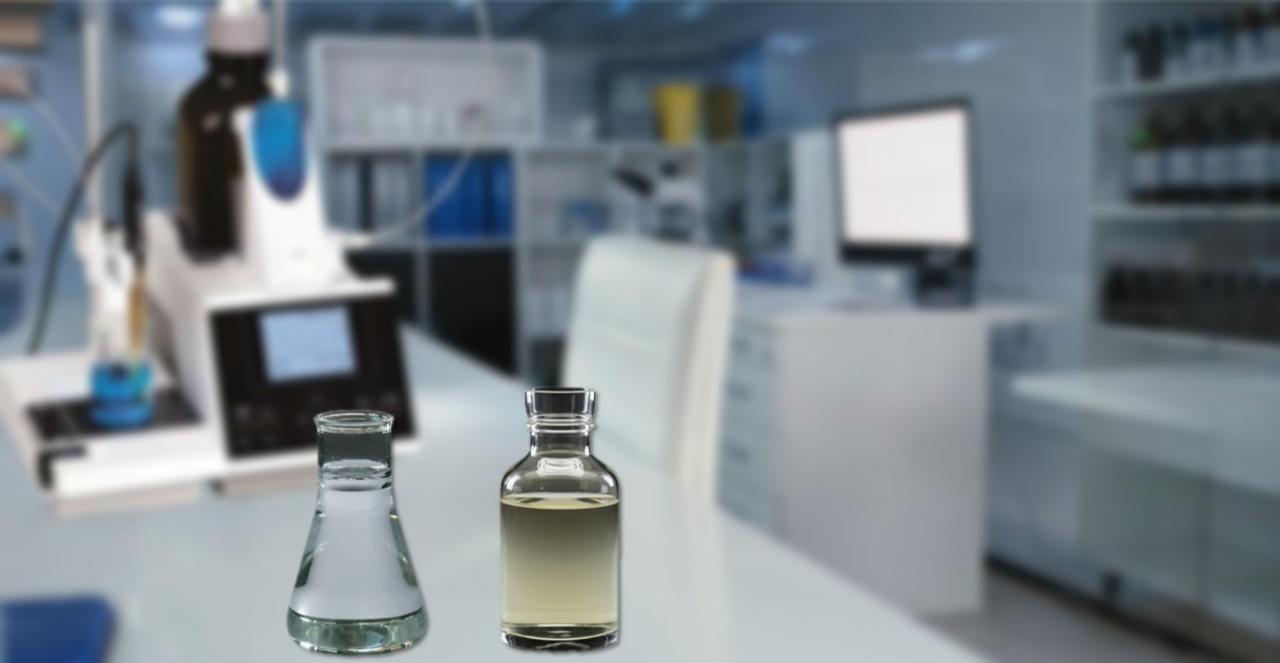
Residual unsaturated bonds are highly reactive. A high Bromine Index means your LAB is prone to oxidation and discoloration during storage. During sulfonation, these impurities cause side reactions that darken LABSA (giving a red or black tint), ruining light-colored end products. Monitoring this LAB quality metric ensures consistent product appearance.
What’s the Industry Standard?
Premium LAB from modern processes (e.g., Detal) boasts a Bromine Index below 15 mg/100g. Lower-grade products may exceed 20, increasing production risks.
Sourcing Advice
For high-quality detergents, always choose LAB with a low Bromine Index. It’s the first step in safeguarding your final product’s visual quality.
Sulfonatable Content: The “Yield Rate” of Active Matter
What is it?
Sulfonatable Content is the percentage of LAB that converts to LABSA during sulfonation. This LAB specification represents raw material purity and effective yield.
Why it Matters
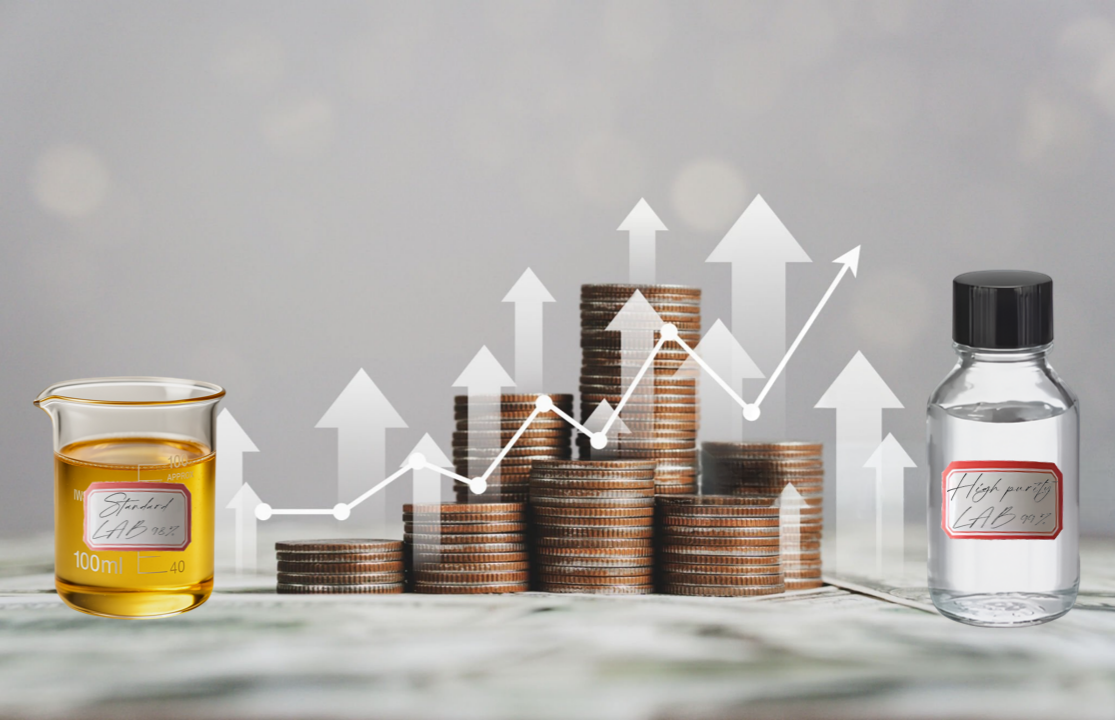
This is the most direct economic indicator among LAB quality metrics. If a batch has 98.5% Sulfonatable Content, only 985 kg per ton becomes valuable active matter. The rest are non-sulfonatable impurities (paraffins, dialkyl tetralins) that waste sulfonating agent and dilute your final product’s active concentration.
What’s the Industry Standard?
Top-tier suppliers guarantee Sulfonatable Content of 98.5% minimum; premium grades reach 99.0%+.
Sourcing Advice
Calculate the “cost per ton of sulfonatable material” rather than just LAB price. Higher Sulfonatable Content often yields lower overall cost-in-use, making it a key LAB quality metric for profitability.
2-Phenyl Content: The “Invisible Gene” Affecting Biodegradability
What is it?
LAB (C₆H₅CₙH₂ₙ₊₁) is a mixture of isomers where the benzene ring attaches at different positions on the alkyl chain. 2-Phenyl Content refers to the proportion where the benzene ring attaches at the second carbon.
Why it Matters
This LAB specification significantly influences biodegradability and solubility of downstream LAS
Biodegradability: High 2-Phenyl Content can slow LAS biodegradation. Controlling it helps meet global environmental regulations.
Solubility: LAS with higher 2-Phenyl Content exhibits different Krafft points, affecting cold-water performance.
What’s the Industry Standard?
Traditional HF processes yield 18-25% 2-Phenyl Content. Advanced Detal processes achieve 15-21%, offering better environmental profile and fluidity. This LAB quality metric is vital for eco-conscious formulations.
Other Key LAB Specifications on a COA
Beyond the big three, a professional COA includes other critical LAB specifications
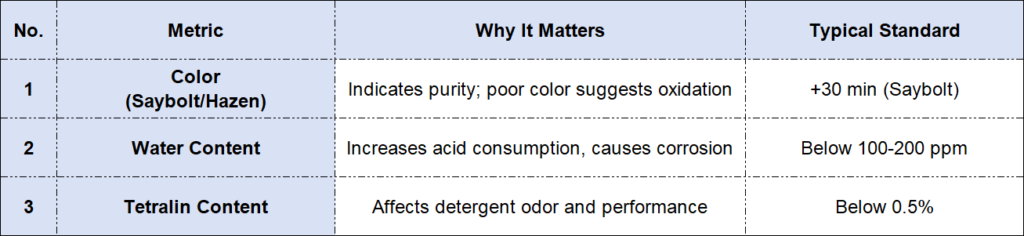
Each of these LAB quality metrics contributes to overall sulfonation efficiency and end-product consistency.
Conclusion
Understanding your LAB’s quality report is key to optimizing production, controlling costs, and enhancing final product quality. The Bromine Index protects appearance, Sulfonatable Content dictates profitability, and 2-Phenyl Content relates to environmental credentials. Together, these LAB specifications define raw material value.
But what do these numbers mean for your bottom line? We’ve analyzed how these quality metrics translate directly into financial impact—from sulfonator fouling rates to active matter yield and annual raw material consumption. The difference between 98.5% and 99.2% sulfonatables isn’t just a lab result; it could mean hundreds of thousands of dollars in annual savings.

When evaluating suppliers, use this guide to compare critical LAB quality metrics. Then, take the next step: read our detailed analysis on how high-purity LAB lowers your total manufacturing cost, complete with a side-by-side cost comparison and maintenance impact calculations.
If you have questions about LAB technical specifications or would like detailed Certificates of Analysis (COA) and technical data sheets, contact us via email: karen@yrcexport.cn
Our technical team responds within 24 hours with customized raw material selection advice. Whether you need to discuss specific LAB quality metrics or request a customized quotation based on your production volume, we’re happy to assist.