
Colored speckles add visual appeal and functional cues to cleaning products. But poor selection or mismatched processing can cause serious issues. Drawing from real customer collaborations, we present five common formulation pitfalls with colored speckles and how we solved each one.

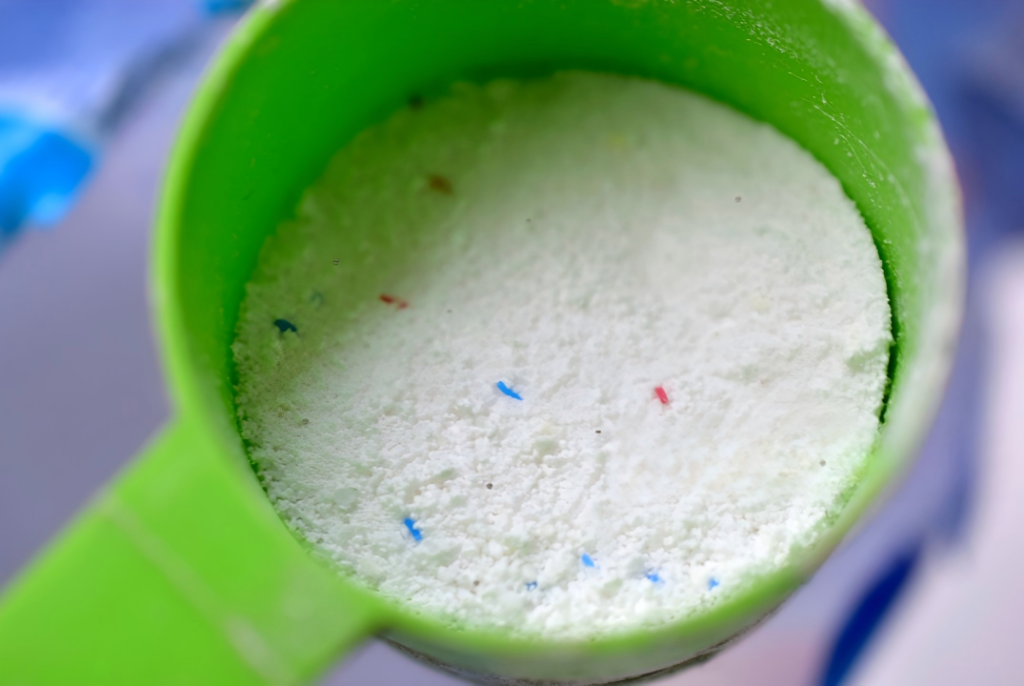
Case 1: Black Burn Spots in Laundry Powder
Symptom
A laundry powder maker found black specks in finished batches, especially noticeable against white powder. Replacing base ingredients didn’t help.
Root cause
The speckles had low heat resistance (80°C limit), while spray drying reached 110°C. They softened, decomposed, and carbonized.
Solution
We supplied heat-resistant colored speckles with high-melting-point carriers (modified polyethylene wax) and a thermal-stable coating. They withstand 120°C+ short-term exposure.
Result
Black spots disappeared. The customer now uses our heat-resistant speckles as their standard for all powder products.
Case 2: Speckles Floating or Sinking in Liquid Detergent
Symptom
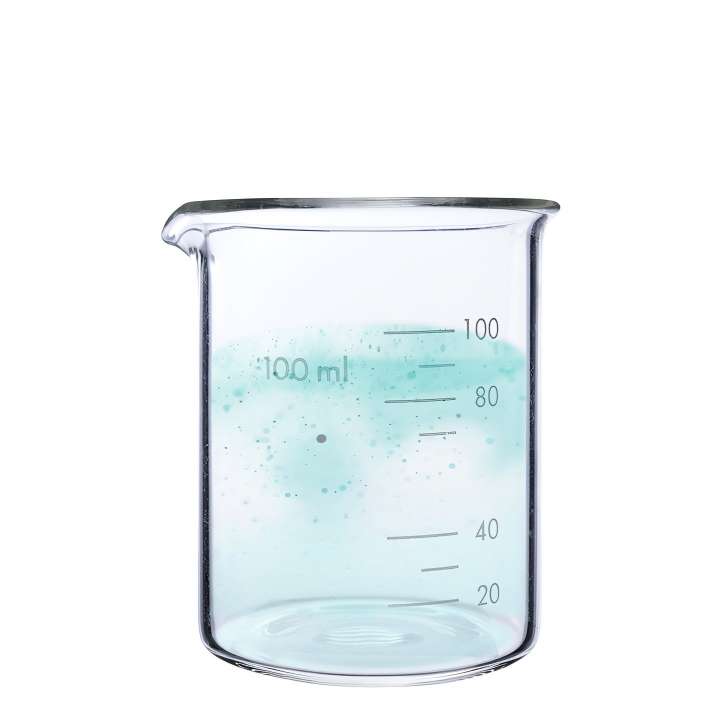
In a transparent liquid laundry detergent, speckles quickly floated or sank. Consumers saw all particles at the bottle neck or bottom, breaking the “speckles in every dose” promise.
Root cause
Severe density mismatch – liquid base at 1.05 g/cm³, speckles at 1.30 or 0.85 g/cm³. Also, no surface binding sites for suspending agents.
Solution
We used density-tunable technology to match speckle density to within ±0.02 g/cm³ of the base liquid, plus hydrophilic surface groups.
Result
Speckles stayed suspended for over 12 months. The customer launched a premium “speckles in every drop” product.
Case 3: Speckles Crumbling During Tablet Compression
Symptom
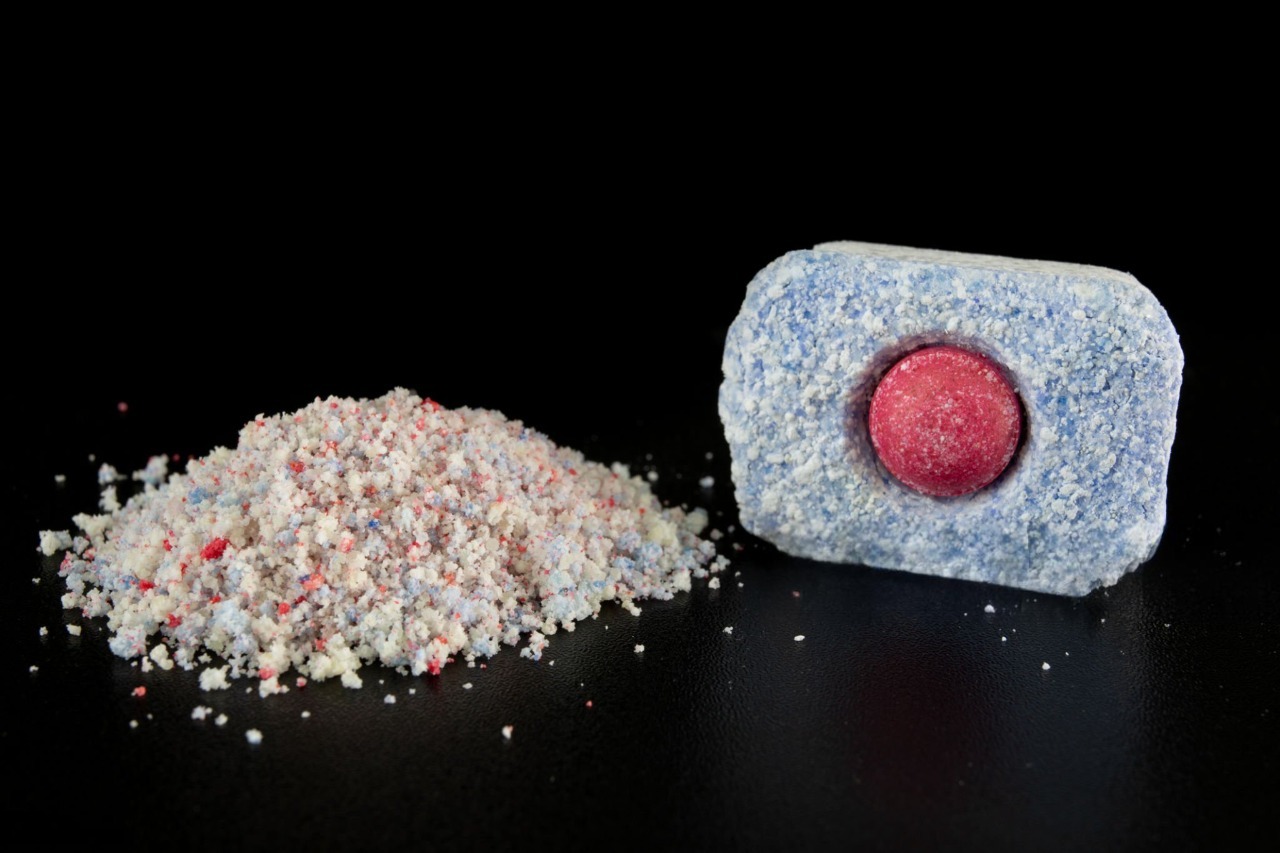
A dishwasher tablet maker saw speckles crush into fragments, exposing white cores and losing color.
Root cause
Insufficient mechanical strength – simple extrusion cut particles had low density and micro-cracks, failing under 5–20 kN tableting pressure.
Solution
We provided high mechanical strength colored speckles via multi layer granulation and spheronization. They withstand >30 kN without breaking.
Result
Speckles remained intact and saturated. The customer adopted them across their premium tablet line.
Case 4: Speckles Fading in Transparent Packaging
Symptom
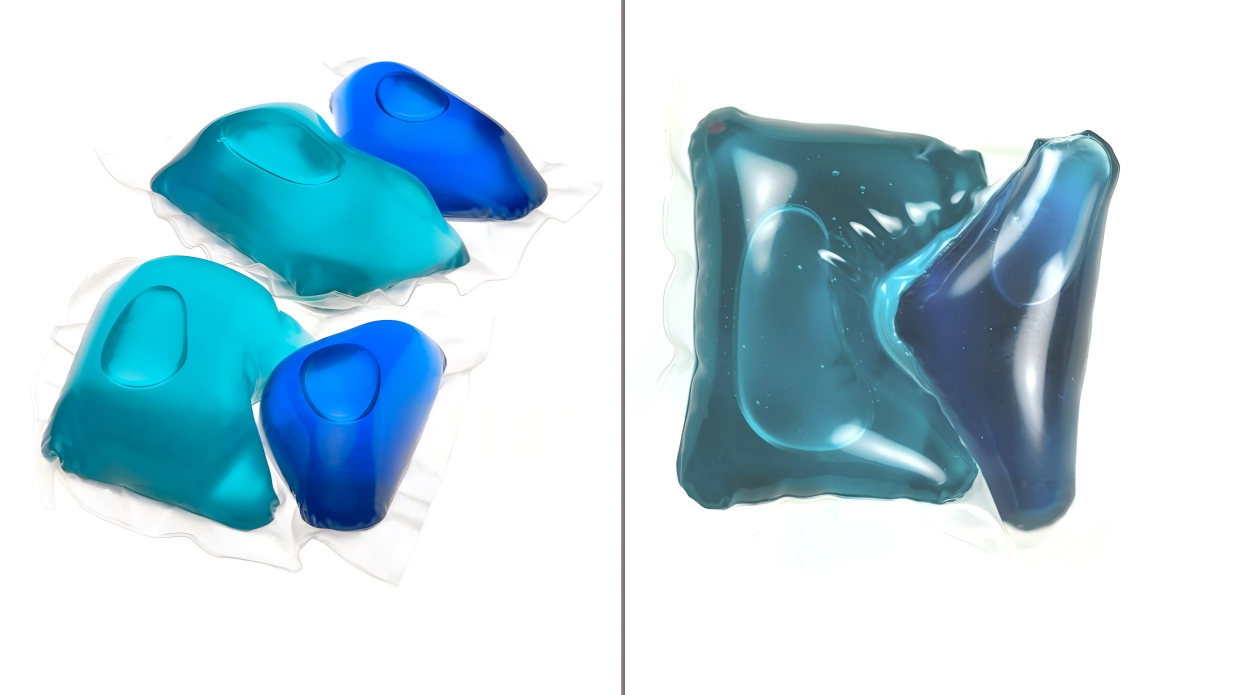
A laundry pod in clear PET bottles saw vibrant speckles fade noticeably within three months. Returns increased, retailers demanded action.
Root cause
Poor light stability – conventional dyes without UV absorbers or anti-photo-oxidation protection. Sunlight and retail lighting destroyed dye chromophores.
Solution
We developed light-stable colored speckles using high-light-fastness pigments (phthalocyanine, iron oxide) plus a UV absorber (UVA) layer and hindered amine light stabilizers (HALS). Each batch passes ISO 4892-2 accelerated aging (200h xenon arc, ΔE<3).
Result
Color remained stable for 12 months on shelf. Complaints dropped to zero, and the customer made our speckles mandatory for all transparent packaging.
Case 5: Speckles Staining Packaging Inner Walls
Symptom
A powdered cleaner in translucent bottles showed red migration marks on the inner wall after two months. Consumers thought the product leaked.
Root cause
Surface free dye migration – low-quality speckles failed to fully encapsulate the dye, leaving residual free dye or solvent that transferred to PE/PP packaging.
Solution
We applied three-layer encapsulation – inner carrier layer, middle barrier layer, outer functional layer. Every batch undergoes a migration test (14 days at 40°C/75% RH with standard packaging film; no visible migration allowed).
Result
Packaging staining complaints dropped to zero, ensuring flawless shelf presentation.
Avoid Trial-and-Error —— Choose a Professional Partner
These five cases cover the most common colored speckles formulation pitfalls: thermal stability, density matching, mechanical strength, light stability, and migration. Each failure costs money and damages brand reputation.

As a professional manufacturer of colored speckles, we provide not only products but also full technical support – from formulation design to process implementation. If you face similar issues or want to prevent them, contact our technical team today.